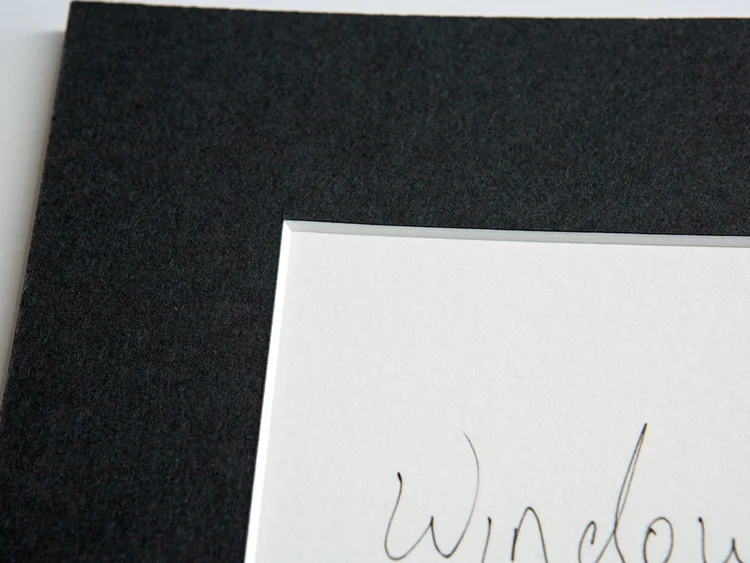
Window mount
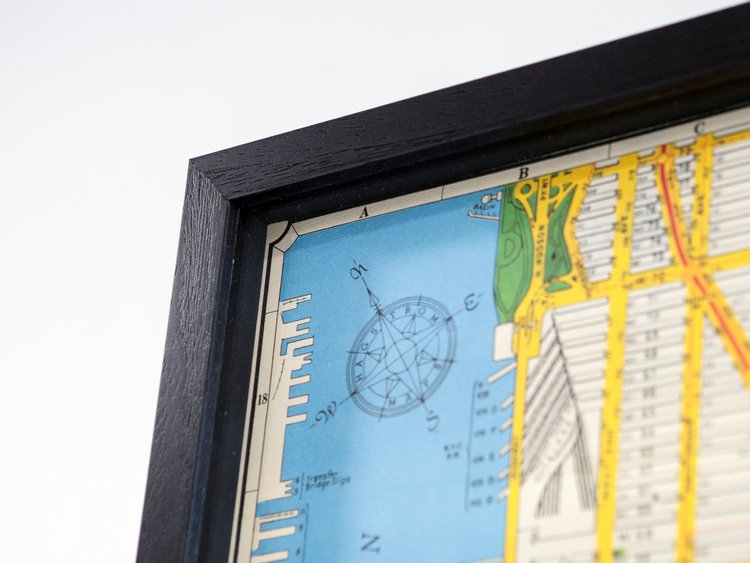
A window aperture surrounds the artwork and overlaps its edges. It gives the artwork breathing room and helps it sit flatter within the frame.
BESPOKE picture framing based in Nunhead SE15

I’m Al. My family and I have called Nunhead home since 2016. I started The Nunhead Framer in 2018, a few months after our daughter was born. Perhaps not the most obvious moment to start a business at home, but it gave me the freedom to build the business around family life. I’m still working from that same studio today, though specialist framing machinery has gradually claimed rather more of our home than originally planned.
My route into framing wasn’t exactly a straight line. I trained as a classical actor and worked in theatre for a few years, with a photography side hustle that gradually became a business in its own right. That took me into theatre, advertising and portraiture, alongside my own fine art photography. Furniture making and design have been part of that route too, and you might have seen me in one of the local pottery studios. Art and making have always been there, whatever I’ve been doing for a living.
I design and make every frame myself. I like getting into the details: how an artwork is mounted, the breathing room it needs, and which colours, textures and frame styles bring out the artwork. Even a 5mm difference in a mount can change how it feels. Some artwork needs a straightforward, well-made frame; other artwork calls for more choice. That’s why I offer both Essential and Bespoke framing.
I take on a limited number of projects at a time. When you get in touch, you’re speaking to the person who will assess your artwork and make the frame. Studio visits are by appointment, and you’ll find the practical details below.
For Bespoke framing
All enquiries start by email or the online enquiry form, before we book a studio visit. Send a photograph of your artwork, its details and dimensions, plus any ideas about the framing or where it will hang.
I’ll email my thoughts on mounting, a starting design and an initial estimate, often with photographs of past commissions to help explain the options.
If the suggested design and indicative cost work for you, we’ll book a consultation to review the artwork, try samples and explore other options.
Once we’ve agreed the design and final price, a 40% deposit books the work into production and I’ll confirm the turnaround time.
You choose your frame online in Build Your Frame, so there’s no design consultation and less correspondence. I’ll check your request by email, confirm the details and arrange an artwork drop-off.
The same deposit and collection arrangements apply. Drop-offs and collections still need an appointment.
Consultations, artwork drop-offs and collections all need an appointment. We arrange these by email after I’ve reviewed your enquiry or Essential request. Please wait for me to confirm a day and time before coming over.
The studio is in my home. I’ll send the exact address and visit details with your appointment confirmation.
There’s room for one visitor at a time in the workshop. With limited space and heavy machinery, children and pets can’t come into the studio.
I’m afraid there’s no waiting area, but the Waverley Arms pub is almost opposite if someone is coming with you.
Bespoke consultations usually take around 20 minutes per artwork. Let me know when booking if you think you’ll need longer. Appointments are arranged around my studio hours; evening drop-offs and collections between 6pm and 7pm may be possible by agreement.
I aim to reply to enquiries and Essential requests within three working days. The design and final price are agreed before the work is booked in.
A 40% deposit is paid when you bring in the artwork and book the job. The remaining balance is paid at collection, before the frame leaves the studio. I accept major credit and debit cards, Apple Pay and Google Pay. The studio is cashless.
Most projects take around two to three weeks from artwork drop-off and booking. This depends on the work involved, materials and my schedule. I’ll confirm an expected completion date.
If you’re working to a particular date, tell me when you enquire. I’ll aim to accommodate your timeframe, depending on my current commission schedule and stock availability.
If your deadline needs a faster turnaround, a paid priority option may be available for an additional 25%. I’ll confirm whether I can meet the date and the additional cost before you book.
Mention your Gift Certificate when you enquire or reply to my first email, including its code and the recipient’s name. Bring the original hard copy to your consultation or artwork drop-off; I’ll keep it to apply to your final balance.
Gift Certificates cannot be used to pay the 40% deposit. Their value is deducted from the final balance. They cannot be exchanged for cash or used after their expiry date, and no change is given if the balance is less than their value.
Material and labour costs can change. I’ll confirm the price of your Essential request in my first reply, including any adjustment to the online price, before you decide to proceed. Bespoke estimates are valid for 14 days for the same reason. Once the design and final price are agreed and the work is booked in, that price is confirmed.
If you need to cancel, please email as soon as possible. Any deduction from your deposit will reflect reasonable costs already incurred for your project, including materials ordered specifically for it, workshop time and handling already carried out. I’ll explain these costs and refund the remaining balance, taking account of any costs I can recover or avoid. This does not affect your statutory rights.
I introduced Essential as a more budget friendly way to frame everyday prints, photographs and posters, including artwork for gallery walls. You choose online from a defined range of sizes, frames, mounting styles and glazing, with the price shown as you go. There’s no studio design consultation.
This is my entry level moulding range: real Ayous timber with pre finished surfaces. Black and white have matt finishes; the light oak and wenge options have wood-effect finishes rather than being solid oak or wenge.
The profiles and finishes are straightforward. Corner joins remain visible, and the finish at the corners is less refined than the individually finished frames available through Bespoke. This particular range also dents and marks more readily if knocked, so the edges and corners need extra care.
Essential uses the same conservation grade mounting materials and techniques as Bespoke. I check the artwork and make every frame myself. The streamlined choices and ordering process keep the cost down. Close Mounted is the exception in either range: suitable posters are permanently bonded to a board.
Bespoke offers more choice in frame materials, finishes and specialist mounting. Pre finished mouldings can be part of Bespoke too; the differences above describe this particular Essential range.
I’ll email with photographs when your frame is ready, then arrange a collection appointment. It will be wrapped ready to take home, and the remaining balance is paid when you collect.
Please arrange collection within seven days of the email confirming your frame is ready, unless we agree otherwise. If you’ll be away while I’m making it, let me know when booking and tell me the best way to reach you. Work left beyond an agreed collection period may incur a storage and handling charge of £5 per day; I’ll contact you before applying a charge.
Think about suitable transport and any help you’ll need carrying your frame. If you’re coming by taxi, book your return journey ahead of arriving: this is my home studio and there’s no waiting area. Evening collection may be possible by arrangement.
Let me know their name in advance. The balance must be paid in full before I hand over the frame, whether it’s collected by you or someone on your behalf.
I don’t offer delivery or manage courier drop-offs or collections. Please arrange for artwork to be brought in and collected in person, by you or someone you’ve agreed with me.
I frame artwork on paper, photographs, canvases, boards and selected objects. Size, condition and the mounting required all affect what I can take on in my home studio.
Extra large artwork needs a little more planning, particularly work on paper. Send photographs and dimensions before arranging a visit so I can check the space, handling and mounting involved. Canvases, boards and objects are assessed individually too.
I don’t take on sports shirts or textiles such as samplers, or offer frame repairs, broken-glass replacement or mounts, empty frames and cut glass on their own.
For Bespoke enquiries, I can carefully open an existing frame during your consultation so we can inspect the artwork, mounting and condition together. Up to 10 minutes of dismantling and inspection is included at no charge.
If more extensive dismantling or investigation is needed, I’ll discuss it with you first. Additional workshop time is charged at my standard labour rate, which I’ll confirm before proceeding. This inspection service isn’t included in Essential bookings.
C-type, or chromogenic, prints are made on light-sensitive photographic paper, often by professional photo labs. These and other specialist photographic prints need suitable materials and mounting methods, so please enquire through Bespoke Framing rather than Build Your Frame. If you’re unsure how your photograph was printed, send the lab or printing details you have and I’ll help check.
For Essential, the available sizes are those shown in Build Your Frame. Send other projects through the Bespoke enquiry form.
Measurements, mounting options and looking after your frame.
For artwork on paper, send the full width and height of the sheet, including any plain border.
The full sheet, measured from outside edge to outside edge.
The printed or illustrated area. This may be smaller than the paper. It’s useful additional information, but the full paper size is what I need first.
For an unstretched canvas, send the full canvas width and height, the image width and height, and a photograph showing all the surrounding material. This lets me assess the margins available to wrap around the stretcher bars. For a stretched canvas, send its width, height and depth, plus front and back photographs.
Send photographs and the measurements you can get safely. Please don’t remove delicate artwork just to measure it.
A window aperture surrounds the artwork and overlaps its edges. It gives the artwork breathing room and helps it sit flatter within the frame.
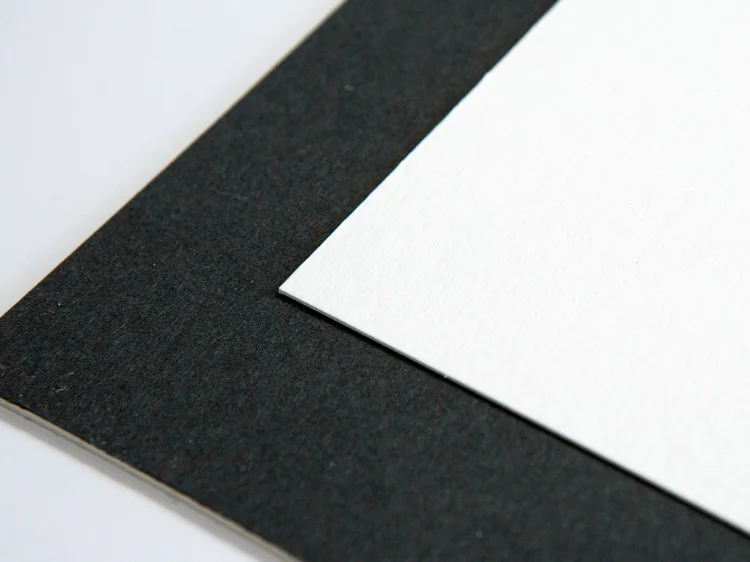
Shows the full sheet and its edges. A good way to keep handmade papers and deckled edges visible.
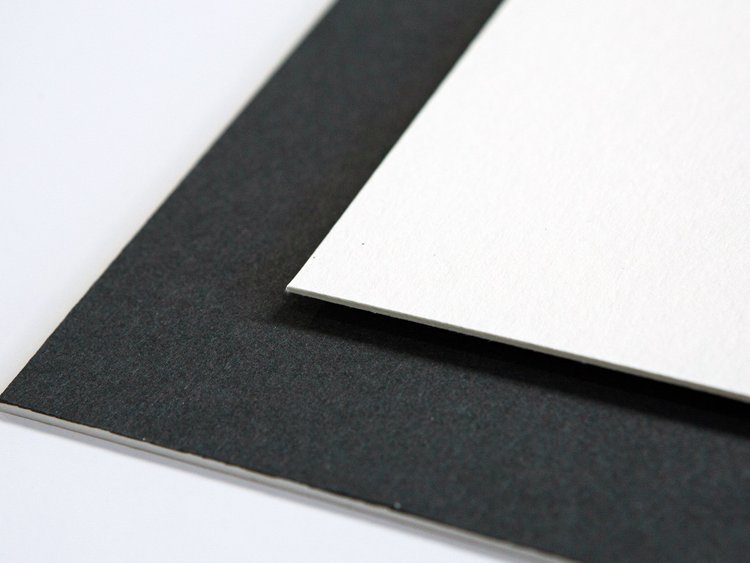
Raises the artwork above the backing, leaving a gap and a shadow beneath its edges.
Suitable inexpensive posters, such as some glossy museum gift shop posters, are bonded to a rigid board for a flat finish. The adhesive is permanent; this is not a conservation method.
Paper naturally expands and contracts as humidity changes, and some movement is normal. This is more noticeable with Float and Shadow Float mounting, where the edges remain free and gentle waves may be visible. It’s part of choosing this style.
A window mount is usually the better choice if you want the artwork to sit as flat as possible. Close Mounted gives a flat finish for suitable posters where conservation is not the priority.
Some plain, unprinted borders may be suitable for trimming, with your agreement. Trimming is irreversible and can reduce an artwork’s value. I won’t cut through signatures, edition numbers, printed details, deckled edges or other important features.
There is an additional charge: £10 for suitable border trimming in Essential; Bespoke trimming is quoted before we agree the work.
For Essential, I will not trim artwork to fit a standard size. The original paper size determines the Essential frame size. Trimming only reduces a suitable plain border for Float or Shadow Float mounting.
Mount decoration can be used wherever mountboard is visible. One of my favourites combines a float mount with a window aperture around it, leaving a gap before the window mount begins.
Layers of mountboard reveal narrow borders of colour around the aperture.
Fine channels cut into the mount surface to reveal its core.
Hand drawn wash lines and painted wash panels around the artwork.
Offset or stepped corners can change the outline of the window.
A deeper angled mount edge, or a narrow decorative timber moulding inside the aperture.
Create depth between the artwork and glazing. Their colour can become part of the design too, including the coloured options in Essential.
These details can be combined. We’ll look at what works with your artwork, rather than adding decoration for its own sake.
How your artwork is mounted matters. The materials, hinges and methods used inside the frame all play a part in its preservation.
I use conservation grade mounting materials and techniques as my normal approach. Where adhesive should not touch the artwork, I use other mounting methods. Close Mounted is the exception: suitable posters are permanently bonded to a board, and I explain this before we agree the work.
For artwork that needs a higher level of preservation, the details extend throughout the frame.
Museum grade cotton mountcard is made from 100% cotton fibres, avoiding the lignin found in ordinary wood pulp. Unsuitable boards and acidic materials can discolour the artwork’s paper and, over time, weaken it and make it brittle. Conservation grade mountcard can also be made from purified, lignin free wood pulp.
I use hinging papers in a range of weights to suit the artwork, down to almost translucent Japanese tissue. Tissue made from long kozo fibres can be exceptionally fine while retaining strength, allowing lightweight hinges for delicate artwork.
Wheat starch paste is a traditional adhesive used in conservation and museum framing. I prepare it to suit the artwork and the hinges, adjusting its consistency and application for the particular job.
For museum framing, the rebate inside a timber frame should be lined with a suitable barrier to help isolate the artwork and mount package from acids and other potentially damaging substances in the wood. Extra barrier boards can provide further protection where appropriate.
These choices work together with the glazing, backing and frame construction. We’ll discuss the level of preservation appropriate for your artwork.
Reversible techniques are designed to allow the mounting to be undone and the artwork returned to its condition before framing. What is possible depends on its materials and condition; this is not a guarantee against ageing or existing damage. Close Mounted uses permanent adhesive and is not reversible.
Corners and edge supports can secure suitable artwork without attaching adhesive to it. Photographic corners can be useful for sensitive photographs, including suitable C type prints.
A recessed layer between the window mount and backing makes room for thicker or uneven artwork. Where suitable, the mount can be constructed to secure the artwork without adhesive attachment.
I stretch suitable canvases over wooden stretcher bars before framing. Photographs and measurements help me assess the canvas, its condition and the material available around the image.
These are assessed individually. Fittings and mounting methods need to suit the artwork’s weight, thickness and condition. I use reversible methods wherever suitable.
Carry your frame upright, supported at each side. Avoid lifting it by the top edge or twisting it. Keep it wrapped if you’re storing it, on a stable padded surface, and don’t stack other items on top.
Essential frames use selected pre finished Ayous timber mouldings. Ayous is lightweight, and the finishes need care around edges and corners, where knocks can leave marks, chips or dents. Avoid resting the frame directly on hard surfaces.
Use fixings suited to the frame, its hanging fittings and your wall. Two fixing points can help where the fittings allow. If you’re unsure about large or heavy work, ask a professional installer.
Use a clean, soft microfibre cloth. If needed, apply a small amount of suitable ammonia free, non abrasive glass cleaner to the cloth, rather than spraying the frame. Wipe gently and keep moisture away from the edges, frame finish and artwork.
Avoid abrasive pads, blades and harsh cleaning products, which can scratch glass or damage specialist coatings.
Avoid direct sunlight, radiators and places with large changes in temperature or humidity, such as bathrooms. UV filtering glazing does not prevent all light damage. Tell me if you have a particular location in mind.